How Scientists Plan to Stop a Doomsday Asteroid From Hitting Earth
Global space agencies and astronomers are actively refining strategies for doomsday asteroid deflection to safeguard Earth from catastrophic cosmic impacts.
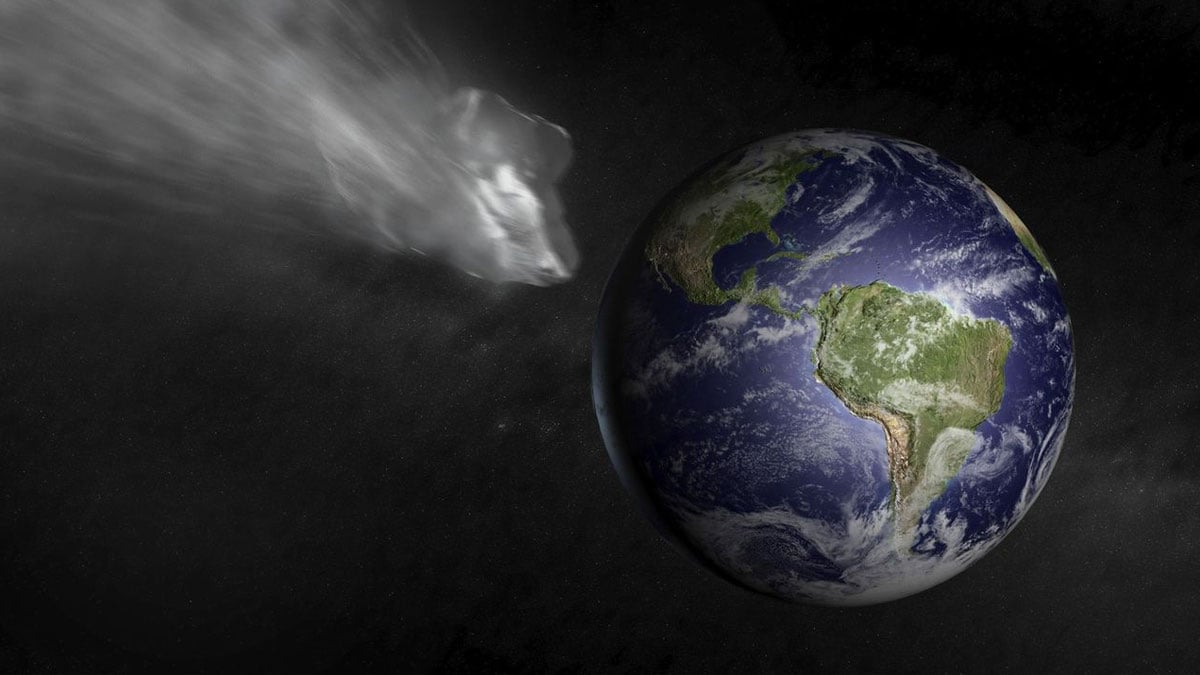
The threat of a major celestial collision has moved from the realm of science fiction into the spotlight of serious scientific research. Astronomers, aerospace engineers, and planetary researchers worldwide are continuously refining strategies for doomsday asteroid deflection to protect our planet from potential cosmic events. While the vast expanse of space contains millions of traveling space rocks, modern detection systems allow scientists to monitor potential hazards with unprecedented accuracy. Understanding how these massive celestial bodies move—and how humanity might alter their trajectory—is central to building a comprehensive global defense framework against future threats.
Understanding the Threat of Near-Earth Objects
Near-Earth objects, commonly referred to as NEOs, consist of comets and asteroids that have been nudged by the gravitational attraction of nearby planets into orbits that allow them to enter Earth's neighborhood. While the majority of these space rocks pose no risk to life on Earth, objects exceeding a certain diameter could inflict severe localized destruction or even planetary disruptions if an impact were to occur. Scientists classify these objects based on their size, speed, composition, and orbital proximity to Earth.
Evaluating the true hazard level of an asteroid requires rigorous surveillance and complex mathematical modeling. Planetary defense experts focus primarily on identifying objects well before they pose an immediate danger. By establishing precise trajectory mapping, researchers can determine whether a space rock will intersect Earth's orbit decades into the future. This long lead time provides space agencies with the window needed to design, launch, and execute a mitigation mission long before any actual crisis materializes.
Core Scientific Strategies for Asteroid Deflection
Halting or altering the path of a massive asteroid requires applying force to change its velocity over time. Even a tiny adjustment in speed—measured in fractions of a millimeter per second—can alter an asteroid's course by thousands of miles over several years, causing it to miss Earth entirely. Scientists have evaluated several theoretical and practical methods to achieve this outcome.
1. Kinetic Impactors
The kinetic impact technique involves slamming a high-speed, unmanned spacecraft directly into an incoming asteroid. Rather than destroying the celestial body, the goal is to transfer momentum, subtly pushing the asteroid off its collision course. This approach relies heavily on early detection, as the orbital shift accumulates gradually over years of space travel.
2. Gravity Tractors
For situations where an asteroid is discovered decades in advance, a gravity tractor offers a controlled deflection option. In this scenario, a heavy, specialized spacecraft flies alongside the target asteroid without touching it. Over an extended period, the mutual gravitational attraction between the spacecraft and the asteroid gently pulls the rock off its natural trajectory.
3. Nuclear Detonation Options
When dealing with extraordinarily large asteroids or situations with very short lead times, conventional kinetic impacts might prove insufficient. In such extreme cases, scientists consider a standoff nuclear detonation. By exploding a nuclear device at a calculated distance from the asteroid, intense heat vaporizes part of the object's surface, creating a propulsion effect that shoves the remaining mass off course.
Early Detection and Surveillance Infrastructure
Deflection technology is only as effective as the detection systems that support it. Astronomical surveys utilizing ground-based telescopes and space observatories continuously scan the night sky for unidentified space rocks. Automated algorithms track moving points of light, calculating their orbital parameters and determining whether they pose a long-term risk to Earth.
Key components of global tracking systems include:
- Wide-Field Sky Surveys: Continuous imaging systems designed to identify dark celestial objects passing near inner planetary orbits.
- Radar Surveillance Networks: High-powered ground radars capable of measuring an asteroid's exact shape, rotation, surface characteristics, and precise trajectory.
- Space-Based Infrared Observatories: Telescopes positioned beyond Earth's atmosphere to detect the thermal radiation emitted by dark, heat-absorbing asteroids.
- International Data Sharing Centers: Centralized databases that aggregate tracking data from observatories around the globe to verify orbital calculations.
What Planetary Defense Means for Ordinary Citizens
For the average person, news regarding asteroid risks can sound alarming, but modern planetary defense initiatives are designed specifically to eliminate uncertainty and panic. The reality for ordinary citizens is that space agencies are proactively building defense protocols long before any severe threat arises. Breakthroughs in orbital mechanics and deflection technology mean that planetary protection is moving from a speculative endeavor to an organized engineering discipline.
Public safety in the event of an astronomical concern relies heavily on verified information and early notification. Governments and scientific organizations maintain clear reporting channels to ensure accurate risk levels are communicated without sensation. Members of the public are encouraged to consult official space agency updates and trusted astronomical portals to confirm details regarding celestial events, rather than relying on unverified internet speculation.
International Collaboration and Future Security
Protecting Earth from space hazards is inherently an international responsibility. No single nation possesses exclusive domain over space exploration, and a catastrophic impact would affect global weather, ecosystems, and economic stability. As a result, international working groups bring together space agencies, defense experts, and scientific institutions to establish shared action frameworks.
These collaborative efforts focus on joint mission planning, standardizing danger alert metrics, and conducting practical simulated impact drills. By maintaining transparent communication networks and developing adaptable space technologies, the international scientific community continues to strengthen Earth's collective readiness against deep-space threats.
While the vast universe presents ongoing natural phenomena, modern science offers unprecedented tools to safeguard human civilization. Through continuous sky mapping, advanced spacecraft development, and global coordination, researchers ensure that potential asteroid threats are monitored and mitigated long before they become dangerous. Readers seeking up-to-date trajectory reports and planetary defense progress should regularly check announcements published by verified space agencies and official astronomical research institutions.
Source: ARY News